In a previous article that addressed a literature review of correlates of facial beauty such as averageness, femininity and fluctuating asymmetry (random component of bilateral asymmetry), I posted toward the end a series of pictures of nude women, and asked which of them would be rated as having the most attractive physique by most people. The pictures were taken from the photography of Akira Gomi.
Thornhill and Grammer(1, pdf) had these pictures rated by men as follows. Some men were shown the face only. Others were shown only the front view of the body with face hidden, and a third group was shown only the back view of the body. The authors then analyzed the results and found that the attractiveness ratings of these three groups of men were in agreement with each other. In other words, some factors related to beauty in women have a global effect. These factors are most plausibly sex hormones, and in the study it was noted that women rated more attractive were more feminine.
A second study, by Schaefer et al.,(2, pdf) on the same dataset, used geometric morphometrics (the proper way to assess shape) to address how face and body shape varied with attractiveness. This study was published after I posted my article, and it helps answer which of the women I featured would be rated as having the most attractive physique by most people.
Fig. 1 shows change in face shape as a function of attractiveness. The dots are the landmarks assessed. The deformation of the 2D grid in the background depicts how shape changes. Increasing attractiveness corresponded to wider faces, bigger lips, narrower noses and shorter chins. These changes correspond to greater femininity.
Fig. 1. The figure in the middle shows the average face shape, the one on the left shows how decreasing attractiveness transforms it, and the one on the right shows shape transformation resulting from increasing attractiveness. The shape changes are depicted with ten-fold exaggeration.
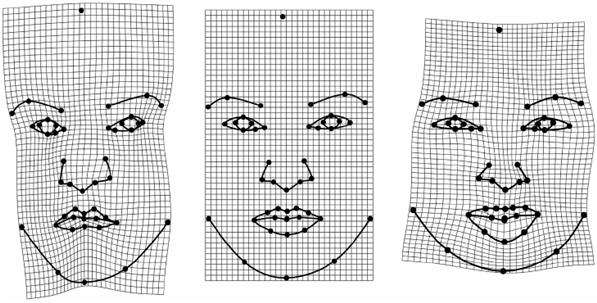
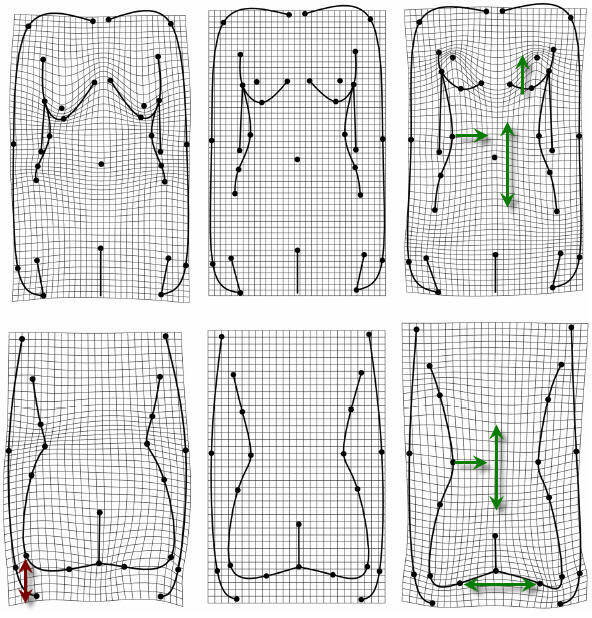
Fig. 2 shows change in body shape as a function of attractiveness. Increasing attractiveness corresponded to a higher placement of the breasts, a narrower waist, a narrower rib cage, a vertically elongated abdominal region, a wider pelvis (birth canal region; see bottom green arrow) and shorter arms. These changes correspond to greater femininity.
Fig. 2. The figure in the middle shows the average body shape, the one on the left shows how decreasing attractiveness transforms it, and the one on the right shows shape transformation resulting from increasing attractiveness.
The women not only had different body shapes but also different body sizes. The authors decided to assess how shape varied as a function of attractiveness rating by adjusting for the body mass index (BMI; weight divided by the square of the height).
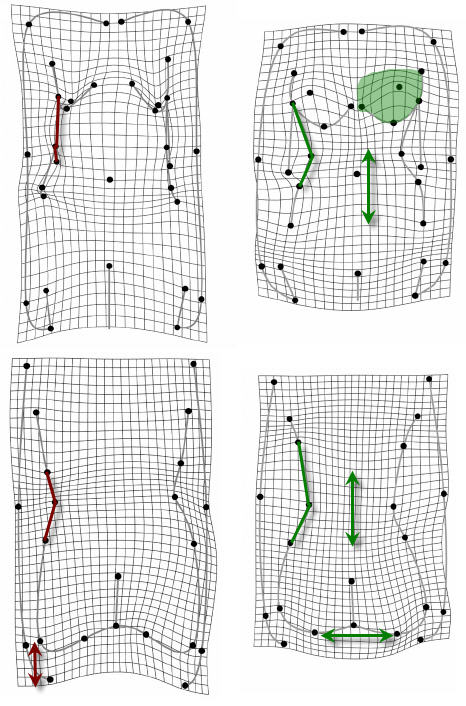
Fig. 3 shows change in body shape as a function of attractiveness when BMI is held constant. Increasing attractiveness corresponded to larger breasts, a narrower waist, a vertically elongated abdominal region, a wider pelvis (birth canal region; see bottom green arrow) and shorter arms. Fig. 3 depicts how the distribution of fat changes with increasing attractiveness: less deposition in the mid-section (abdominal region) and more at the bust and hips; these changes correspond to greater femininity.
Fig. 3. The figure on the left shows how decreasing attractiveness transforms the body, and the one on the right shows shape transformation resulting from increasing attractiveness. BMI is held constant.
The results suggest that some of the factors responsible for a correspondence between facial attractiveness and body attractiveness of women are sex hormones since they have a global effect; a more feminizing influence on the face will correspond to a more feminizing influence on the body.
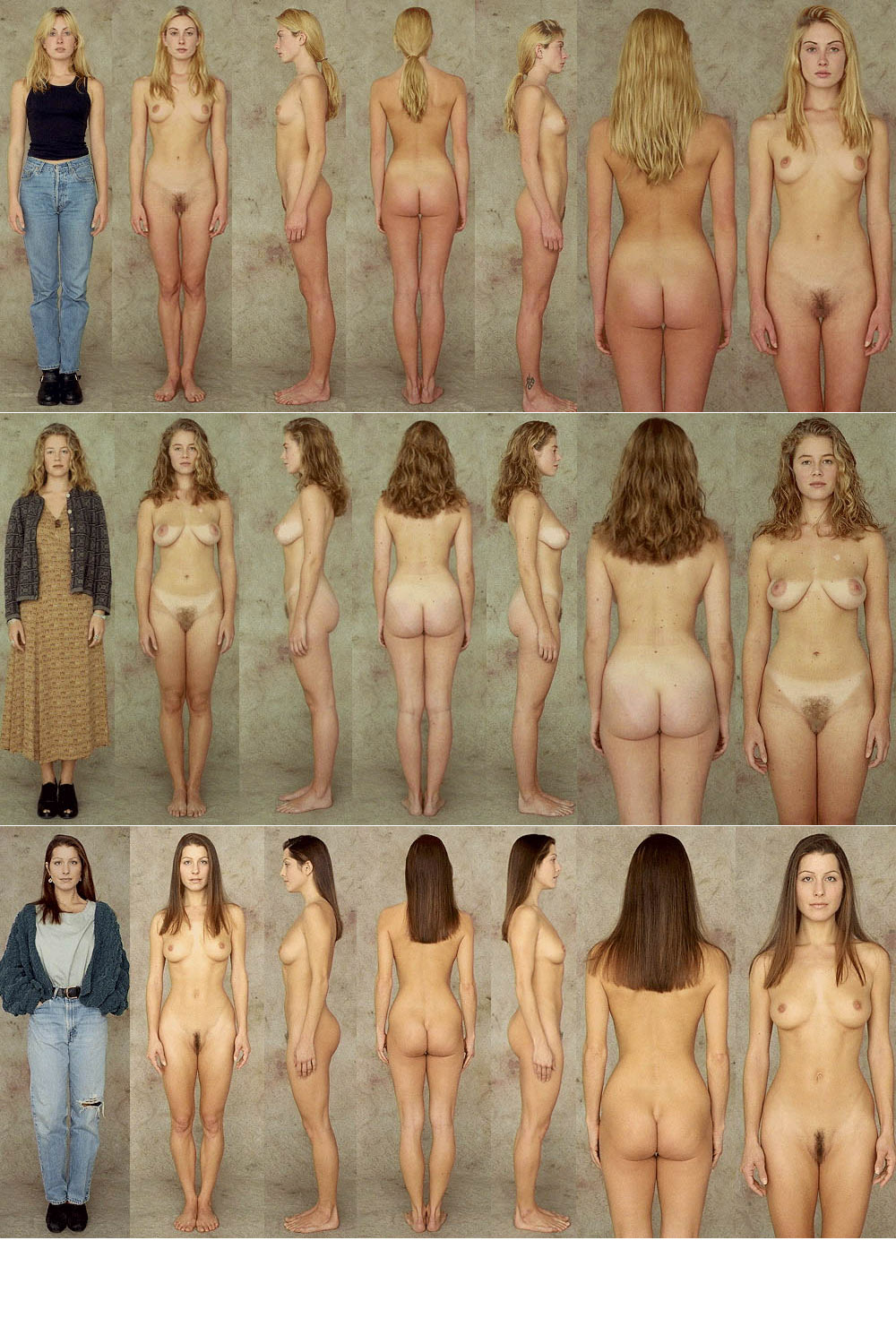
Fig 4. shows three of twelve women taken from the article referenced at the beginning. I argued that the woman in the middle would be rated as having the most attractive physique by most people (not all), and did so before coming across this study. Those who disputed this contention mostly preferred the other two women shown, but looking at Figures 2 and 3, I believe I was right.
Fig. 4. Some picture series photographed by Akira Gomi. More pictures were posted in the article on the importance of femininity to beauty in women, and even more can be obtained here.
Schaefer et al. have published an excellent paper, but they should have left out the evolutionary psychology material mentioned in the beginning. There is no need to be going into the details of why the preferences documented in the study exist by referencing the literature produced by psychologists who mostly have a weak background in physiology as it undermines the quality of the paper. For instance, the authors mentioned a correlation between bilateral symmetry and heterozygoisty (how genetically diverse one is), but this correlation is very weak.(3) They also mentioned fluctuating asymmetry as an indicator of developmental stability, but again fluctuating asymmetry is a weak predictor of developmental stability.(4, 5) They cited some of the literature on the handicap principle, which postulates a preference for features that have some handicap associated with them (e.g., higher testosterone or higher estradiol levels), but in a few individuals with sufficient genetic quality, the handicaps are minimized, telling others that these individuals have the genetic quality to handle what most people can’t. There is a philosophical problem with the handicap principle; the same data can be interpreted in an alternative way, namely the preference being for the exaggerated characteristic per se, which was selected as a result of sensory biases (e.g., toward brighter colors, lager size, etc.), and those unable to develop the exaggerated characteristics were reduced in number by being selected as a mate less often.
References
- Thornhill, R., and Grammer, K., The body and face of woman: one ornament that signals quality?, Evol Hum Behav, 20, 105 (1999).
- Schaefer, K., Fink, B., Grammer, K., Mitteroecker, P., Gunz, P., and Bookstein, F. L., Female appearance: facial and bodily attractiveness as shape, Psychology Science, 48, 187 (2006).
- Vollestad, L. A., Hindar, K., and Moller, A. P., A meta-analysis of fluctuating asymmetry in relation to heterozygosity, Heredity, 83 ( Pt 2), 206 (1999).
- Rasmuson, M., Fluctuating asymmetry--indicator of what?, Hereditas, 136, 177 (2002).
- Lens, L., Van Dongen, S., Kark, S., and Matthysen, E., Fluctuating asymmetry as an indicator of fitness: can we bridge the gap between studies?, Biol Rev Camb Philos Soc, 77, 27 (2002).
Comments
When I looked at the photos when you first posted them, I did not find the second woman to be the most attractive. I preferred the first or the third, I forget which.
I think part of the reason is the first amazing confound in the study: #2 has tan lines. I find tan lines very unattractive, and they are also distracting. I probably just instantly dismissed the picture as less attractive than #1.
When I first looked at the photos originally and even now, my tendency was to mainly take into account the last photo in the set, with the zoom on the frontal view, because it contained more information than the others (the face was harder to see in the full body frontal). That last photo in the set is relatively more flattering for #1. From behind, #2 is the clear winner. However, when taking a quick glance, the last set of photos tends to dominate, because they are most detailed and include the best view of the face.
Also, I think there are dimensions other than femininity on which I found #2 to be less attractive. I prefer straight hair to waving hair. And I found her breasts to look a bit maternal (an effect that the tan lines made even worse), unlike the other two's, even though theirs were a bit small for my taste. #1's face just seems prettier to me. I think her lips look slightly fuller, and the eyelashes on top of her eyes are darker and make her eyes look more attractive. Her nose is closer to her lips, which I find more attractive. #1's face is a bit masculine for my taste, and #3's is much too masculine, though #2's face just looks very plain.
Furthermore, when I looked at all the photos in quick succession, there was a contrast effect which made each of the three photos in this post standout from the others (which were substantially less attractive), but made them stand out less from each other.
I think what this shows is that within the range of moderately attractive women (perhaps 0.25 SD above the mean to 1.25 SD), it's possible for a woman to get over a slight lack of femininity due to other factors in beauty other than femininity. However, in the range of very attractive women (perhaps 1.5+ SD), a substantial amount of femininity is necessary, since femininity is such as large factor in female attractiveness.
If this hypothesis is correct, then I think it may clarify a confusion that many people have with this site: they think you are saying that non-feminine women are ugly or automatically unattractive. In reality, there are plenty of women without high levels of femininity that are attractive and dateable to the average male (who would be thrilled to have a girlfriend of 0.25 SD above the mean in attractiveness), and attractive men will even be down with women 0.25-0.5 SD below them in attractiveness.
Although I suspect that men's attraction to women increases linearly or perhaps exponentially with femininity up to a certain point, I would speculate that the actually mate choice they show in their behavior follows a threshold model or a step model. He just needs to feel that she is "hot," "cute," or at least "doable," and within women who exceed that threshold, other factors become more important in mate choices, such as her personality traits and availability.
What you seem to argue on this blog instead is that a high level of femininity is necessary for women to break into the elite levels of attractiveness, such as the level that beauty pageants and fashion models should be at.
Consequently, my intuition is to summarize the importance of femininity in beauty like this:
1. A certain low cutoff point of femininity must be exceeded for a woman to be considered attractive at all by most heterosexual men. This is the cutoff to avoid looking like a transgendered person or a butch lesbian. Without meeting that cutoff, there is no way for a woman to be considered a sexual prospect by most (heterosexual and sober) men, no matter what level of she has of factors in attractiveness other than femininity.
2. A certain high cutoff point of femininity must be exceeded for a woman to be considered extremely attractive by most heterosexual men. Without meeting that cutoff, there is no way for a woman to be considered a goddess by most heterosexual men, no matter what level of the other factors in attractiveness she has.
3. Yet in between those cutoff points, femininity is still important, but other factors in beauty can also be relatively important (makeup and clothes can also have a larger effect on attractiveness). This region is where most heterosexual men are operating, and these are most of the women they are choosing in their actual behavior as dates and girlfriends. They might prefer women who exceed the high cutoff of femininity and attractiveness, but most men will not have access to these women.
To what degree does this summary match your intuitions?
I think that there are many variations on feminine beauty, just as there are many variations on male beauty or attractiveness, and it depends on the taste of the individual, or, the "eye" of the beholder. I do agree that many female models today look a bit harsh, but there are some attractive ones here and there. Then again, many of the male models to me, also look very harsh and overly masculine, and I'm more attracted to men who don't look so garishly rugged.
I also think it's important to remember that beauty ideals change. It was once thought, during the 1930's, that a tomboyish beauty and flat chest were ideal (flappers, etc.) Back in ancient Greek, the ideal beauty was androgynous.
The entire emphasis on skinniness today also has to do with financial status. When it used to be hard for poor people to eat, like in the times of Rubens the painter (thus the term Rubenesque), people used to show off their higher social status by having a larger girth. Women were considered beautiful if they were heavy. You can still see this going on in India, where women of higher status are a bit "chubby."
So I don't really think that "masculine-females" are a new invention, it's just that people think that women with higher cheekbones are more photogenic, and to be honest, I think they do photograph better. I am a woman with a rounder face and I don't have very jutting features; however, I don't often photograph well, but I think at times I look a bit better (in real life) than many of the harsher-looking models you see in magazines. Then again, it's all relative. Some of the models you hate, like Alessandra, can have good and bad days just like the rest of us. She often photographs well, but can have bad days too, and this goes for her candid "real life" photos.
Also, I'd like to mention that, if you think having high cheekbones (for women) makes a woman more masculine, then take a look at Asian women. Many Asian women, I think, are very beautiful and very feminine, but they have flatter faces and very high (almost jutting) cheekbones; this, however, does not mar their femininity in any way.
As an end note, I'd also like to make a comment that there are way too many pressures on women already to conform to specific "looks" and stereotypes, and you've probably heard this before, but I think this needs to end. While I think you have some good points about the unrealistic and often weird looks of some models, in the end, all this obsession with womens' looks isn't helping anybody. In fact, women can't help it if they're born looking less feminine than your ideal, so why put more pressure on them.
Erm, not entirely relevant to this post, but Lindsay Lohan has a terrible body shape; why do so many boys fancy her?!
Fig. 1 (right side) face shape attractive x10 - Sophia Loren
Number 1 seems to have proportionally longer legs than the others, and that is feminine, I think. She looks very good from behind and has a nice feminine shape, but somewhat too small breasts and buttocks in profile. Her face is somewhat broad, and the jaw a little too masculine.
Number 2 is very feminine. She also has the most feminine face shape, I think. Oval, fine facial features. Her legs are proportionally shorter in comparison to number 1, so number 1 "wins" there. Her thighs entirely "clash" or merge when she stands with her legs together, and that indicates more body fat than the others.
Number 3 has a more masculine hair colour and face, and high/broad cheekbones, which I think often add masculinity/coarseness. Her legs are too short for her upper body. Like the others she has a small and feminine waist, and her behind looks very good in profile.
Number 2 has more body fat than the others so that might give her a more feminine appearance compared to the others, who are thinner. It is important to pick girls who are equally well-nourished, I think, in order to get a fair comparison. Overall, number 2 is the most feminine one here.
In my opinion none of them are all that. The first one is too flat chested and small, the second one is more feminine but not all that impressive. Although she has a nice hour glass shape from the back, it kind of disappears from the front. I know she is a bit chunkier, but that is really not an excuse. I have an equal hourglass shape from the back and front even when I have a little extra fat here and there. Also, what is up with all their legs? None of them have very nice knees! Soft but well defined knees with porportionate legs and nice calves and ankles that are not too thick or thin, just right and feminine are ideal. I don't see this with these women. The last one just has a weird butt.
Emily, you claim the second girl has an oval face. It's close to my face shape and I would call my face "round". I don't believe she has an oval shape sorry. You also call the women in the many pictures you post "oval" shaped when in fact many times they go from round, to square, to diamond, to oblong, and very rarely oval actually. You claim round faces are so blah, but I like my round face and I think round faces are often feminine. Besides, many "Nordics" have round faces not just ugly Eastern Europeans with hooked noses and broad cheekbones like myself according to you. Oh, and btw, you keep mentioning how everyone else has "massive" cheekbones. Only Nordics don't. Well Scandinavians have larger cheekbones than most. It is evident in your photos as well. Scandinavians are Nordic, but there are many groups of Nordics and Scandinavians definatley have the large cheekbones. Other Nordics have more regressed cheekbones, however they often appear high.
Might I add the second one has saggy breasts. Saggy breasts will always appear larger than they really are. A girl with equally big breasts that are perky, will have what appears to be smaller breasts but really they are just well defined and well perky. I think the best combo is large perky breasts, however still well structured but soft with a tiny bit of sag, but no real sag. Like classic tear drop breasts, only a bit more rounded and perked.
I don't think the Slavic round face is feminine if it is very broad and with massive cheekbones. I think distinctly round faces sometimes lack refinement, and they can often look coarse. A face needs to be more oval than round. Yes, that girl (no 2) has an oval face, not a round one. A face can be more or less oval/long. I didn't quantify how oval her face is but it is not round.
And, no, Scandinavians do not have "larger cheekbones than most". Slavics have more massive and larger cheekbones than Nordics. That is well-known. Generally speaking, the more East you travel, the broader, larger and more protruding the cheekbones will be, and the rounder the face shape will be, ending up in the Asian race.
I don't know how your face shape is relevant, and I haven't commented on it since I haven't seen it. I'm sorry if you think you don't fit my view of what is beautiful. Slavic men can look attractive since the general coarseness of the Slavic face, and the large protruding cheekbones fit men better. Women need the Nordic gracility and femininity. There are always exceptions, of course, but I think this generally holds true.
I think No.1 has the most attractive face, especially the way her eyes/eyebrows are set and her cheekbones...No.2 looks somewhat washed out and plain, she also has a 'mature' looking face when you study her facial features (eyes and eyebrows especially). No.3 is too skinny. No.2 has a body very similar to mine though except my waist is smaller, and thighs thicker, I don't think her breasts are saggy, it's just the shape of them that may make it look a little saggy. They all have great bodies though, and no.2's body look better in profile view than from the front compared the other two.
Hugh: I think your rational and realistic argument does match what Eric is saying