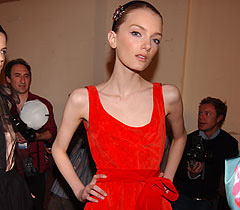
This page organizes information on eating disorders presented within this site. The main focus is on anorexia/anorexic behaviors. Binge eating disorder is not a focus of this site.
Eating disorders statistics
Naomi Wolf refuted.
New studies (published 2006/2007) and literature reviews.
Causes of eating disorders
Factors implicated in the development of anorexia:
Family and interpersonal problems.(3, 4, 5)
Perfectionist attitudes.(6, 7)
The influence of thin high-fashion models. See discussion below.
How it all fits together:
A common profile of an anorexic patient is a girl or young woman with perfectionist attitudes and miscellaneous problems (say, familial) who has come to believe that if only she could be perfect in some way, her problems would go away, and the standard of perfection she decides to emulate is the thin look of high-fashion models. This should clarify the role played by the fashion industry. The fashion world cannot be blamed for genetic susceptibility, familial or relationship problems, or perfectionist attitudes, but it is fully responsible for making thinness in women appear highly desirable. The thinness favored by fashion designers is at odds with the preferences of the majority of women and men.
Feminist perspectives on eating disorders
Feminist perspectives obviously blame heteropatriarchy. There are two major feminist perspectives.
Heterosexual men starving women to keep them in a subordinate position.
The idea is that heterosexual men became vary of the increasing power of women and decided to do something about it by preoccupying women with their self-appearance and starving them by using thin high-fashion models. This notion has been proposed by Susan Bordo and Naomi Wolf, Wolf being the more famous proponent of this notion. This notion is extensively refuted at the page addressing why are fashion models so skinny.
Women deriving a sense of control by controlling what they can.
The idea is that oppression and powerlessness drive some women to derive a sense of control by controlling what they can, namely what they eat.(8) On the other hand, there has been an increase in the prevalence of eating disorders with time in Western nations during the twentieth century, reaching a peak during the later decades, but female empowerment has increased over this period. Therefore, this factor is at most accounting for a small minority of anorexia outcomes in Western societies. Additionally, the only women who would knowingly harm themselves via starvation to derive a sense of control over their affairs have to be mentally disturbed and suffer from abnormalities such as masochism, and feminists have to show how these mental disturbances result from heteropatriarchy.
Curing anorexia
Serious cases of anorexic behaviors require prompt medical attention. Mild cases can be improved/cured via psychological counseling.
The most successful eating disorders prevention programs are dissonance-based interventions. These interventions make at-risk individuals (typically girls with body image issues) think about the reasons behind the origin and perpetuation of the thin fashion ideal and who profits from it. Just getting at-risk girls/women to think about the thin fashion ideal casts doubts in their minds that perhaps this is not an ideal, i.e., such thinking induces dissonance with respect to the lofty portrayal of thin fashion models they observe in the media, and to restore cognitive consistency, a number of the intervention participants come to see the thin fashion ideal as less desirable, which translates to a reduction in disordered eating.
It should be clear that the single most important thing that one could do to reduce the prevalence of anorexia is to make sure that girls and women understand 1) that the great majority of humans do not find the typical thinness of high-fashion models aesthetically pleasing and 2) why the women occupying the top rung of models are so thin notwithstanding the preferences of most buyers of fashion merchandise.
To understand why high-fashion models are typically thin, one should note two additional characteristics of them: above average masculinization and youth (designers prefer teenage girls, even if marketing to women in their 30s and beyond), altogether making high-fashion models approximate the looks of adolescent boys, which is explained by the dominance of the fashion business by homosexual men.
Homosexual fashion designers are able to get away with their choice of models because they use them to sell highly desirable items and do not face competition in the form of an alternative fashion industry that uses women with healthy body fat levels. For instance, if one were to encounter an outstanding dress in a bad packaging, it is not like one would avoid buying the dress, especially if nothing comparable is encountered in a good looking package.
Ineffective approaches
Encouraging body acceptance is of limited help. See comments on the Dove campaign for real beauty. Shock campaigns as in the No-l-ita ad are also not helpful, and one shouldn’t use obese models.
The negative influence of the high status of very thin and masculine high-fashion models
This is a topic that this site is especially interested in. Note that the responsibility does not rest with very thin high-fashion models, but with those who select them, namely the homosexual fashion designers who dominate the fashion business. By now there is plenty of evidence implicating the influence of very thin high-fashion models in triggering anorexic behaviors in many girls and women.(9, 10, 11, 12, 13) This shouldn’t be surprising since high-fashion modeling is clearly the most prestigious type of modeling a woman can indulge in, which explains the impact of high-fashion models. Some would say that movie stars or top singers influence girls more than high-fashion models, but among these three groups, fashion models come closest to being selected entirely for their looks, and hence are better poised to become the reference standard of desirable looks for some. A number of movie stars and singers are themselves influenced by the very thin norm of high-fashion models and hence their influence on others is an indirect influence of high-fashion models.
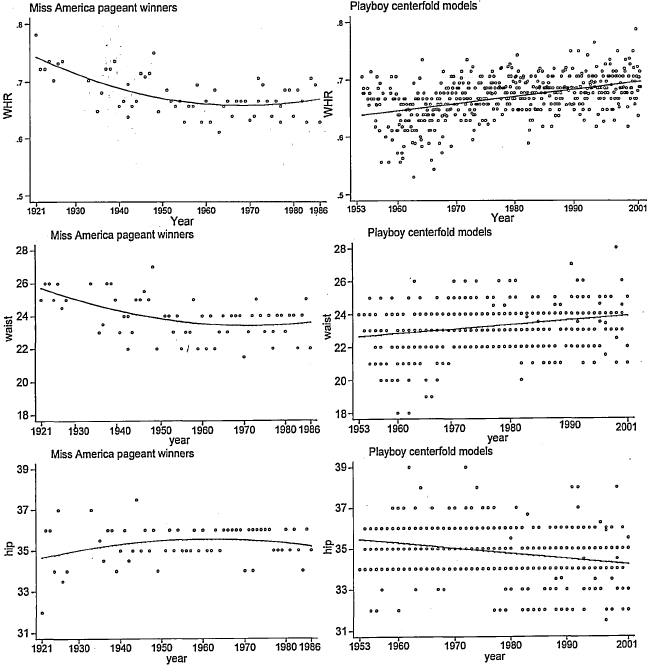
Fig 1. From Freese & Meland(15)
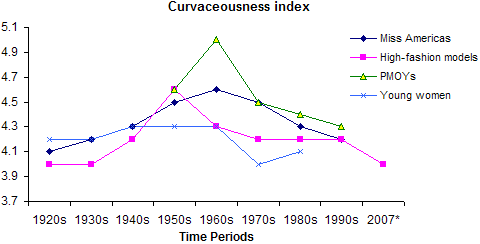
Fig 2. See details.
The femininity of high-fashion models in the twentieth century has varied in a curvilinear manner. High-fashion models tended to be masculinized in the 1920s, became more feminine till the mid-twentieth century, and then started becoming more masculinized; a parallel trend has been documented for Miss Americas and Playboy centerfolds (Playboy was established in 1953).(14, 15, 16) The curvilinear trend among high-fashion models correlates well with a corresponding trend in the tolerance of homosexuals in America and Europe: a post-1920s increase in anti-homosexual sentiments(17, 18) and a post-1960 improvement in tolerance of homosexuals.(19, 20) The prosperity of the 1920s afforded enough freedom for homosexual fashion designers to become prominent, and their domination among fashion designers reflected in the skinny and boyish looks of high-fashion models then. But then, 1929-1939 was the depression era, where one would expect the population to grow more conservative, and the prominence of homosexuals in the public sphere in the 1930s prompted a negative reaction from the public, leading to laws that forced homosexuals into hiding in the 1940s and 1950s. Liberalization from around the 1960s helped homosexual men become more prominent and they have dominated the ranks of the top fashion designers since then. In more tolerant times, male homosexuals in the fashion industry could bring the models more in line with their tastes with less fear of adverse repercussions from being outed. The corresponding trend among Miss Americas is best understood in terms of a trickle-down effect of the influence of high-fashion models. The Playboy trend is due to the bisexual founder of the magazine, Hugh Hefner, having a preference for masculinized women and being able to bring his model choice closer to his tastes as the highest status models, high-fashion models, become more masculine. See more details about the twentieth century masculinity-femininity trend among high-fashion models, Miss Americas and Playboy Centerfolds.
An influence of the high status of high-fashion models is seen in the reported body weights of Playboy centerfolds (Table 1(21)). Table 1 uses the data from mid-1990s high-fashion models, who were heavier than what is currently (2007/2008) preferred (BMI around 16(22)).

Fig 3: The physique of Playboy model Amanda Rushing; at 5-foot-7.5 and 36A-26-35, she was reported to weigh 108 pounds! There are too many similar examples to be explained away in terms of unintentional error.
Playmates in the U.S. edition of Playboy magazine from 1953-2003 averaged a reported body mass index of 18.1 ± 1.32, with 16% averaging a BMI less than 17.(23) Similarly, 72% of the centerfolds from the Feb ’94-Feb ’95 South-African edition of Playboy magazine averaged a BMI less than 18.(24) If the weights of Playboy centerfolds are correctly reported, then most are clearly below the optimal adult female BMI preference in Western adults. But an examination of the pictures of Playboy models (e.g., Fig 3, of which there are examples aplenty) clearly shows that their weights are underreported. Apparently, glamour models’ weight is typically underreported so that they are not seen as inferior to fashion models. Therefore, even if normal women look up to glamour models for comparative purposes, they will mistakenly consider themselves overweight.
A high prevalence of a desire to lose body fat has even been described among beauty-pageant contestants, none of whom are remotely overweight. In a study of 131 American beauty-pageant contestants from 43 states, 89.6% of whom reported being a pageant finalist or winner and 55.2% of whom had competed at the national/international level, 26% had been told or believed that they had an eating disorder, 48.5% reported wanting to be thinner and 57% were trying to lose weight.(25) Compared to women in general, higher rates of mild eating disorder symptomatology and illegal drug use -- presumably to maintain low body fat levels -- have also been reported among professional fashion models.(26) These reports do not capture the actual suffering of many high-fashion models who are forced to starve to retain their job; see a report on Eastern European fashion models and comments on an Editorial on dieting among fashion models.
Some mechanisms associated with the influence of very thin high-fashion models or other hypothetical top-ranked models
It is useful to not only consider some of the mechanisms that are associated with the impact of very thin high-fashion models but also the potential impact of other types of women if they occupied the highest status among models.
Some obese or overweight women can be expected to diet irrespective of the influence of high-fashion models, but dieting on the part of women who weigh within the medically normal or underweight range is of concern. Dieting in some women who are underweight or medically normal-weight results from mental illness, and it is possible that widespread and frequent exposure to high-fashion models or their approximations, in conjunction with imagery associating them with high status, may be a factor behind triggering some eating disorders in women with a liability toward such disorders (see previously mentioned report on a common pathway to developing anorexia); the eating disorders of concern here are anorexia nervosa and bulimia nervosa; anorexia nervosa being characterized by persistent undereating and bulimia nervosa being characterized by episodes of binge eating followed by purging. On the other hand, one hardly doubts that a number of underweight or medically normal-weight women who diet without being mentally ill are attempting to acquire the looks and thereby the status of skinny high-fashion models. The physical appearance of high-fashion models suggests starvation, and it is obvious that one may achieve the same look by eating less. If high-fashion models were highly feminine-looking, it would be obvious that no amount of dieting or exercise would make one look like that.
Many high-fashion models appear anorexic. A visual examination easily reveals that a higher testosterone-to-estradiol ratio compared to the feminine norm appears as the central tendency among female high-fashion models, as assessed via the increased masculinity and reduced femininity observed among them. Interestingly, both anorexic and bulimic women have a higher testosterone-to-estradiol ratio than normal women; both these hormones are depressed in anorexic women, whereas testosterone is elevated and estradiol depressed in bulimic women.(27, 28, 29, 30) Aggressive behavior is frequent in women with anorexia and bulimia, and in both cases, higher testosterone levels correspond to greater aggressiveness.
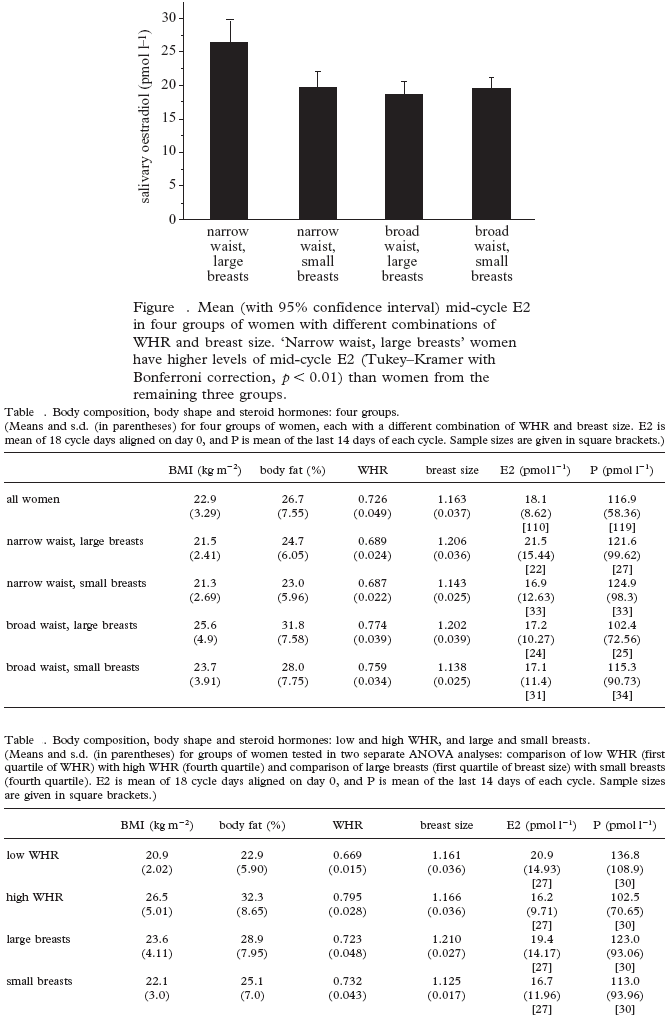
Fig 4: Data from 119 young, non-pregnant, non-lactating, regularly menstruating Polish women not on contraceptives or hormonal medications.(40) Related study on estradiol and face shape here.
The skinniness of high-fashion models makes the sustenance of pregnancy difficult, and medically normal-weight women who diet to present an image of high status likely reduce their fertility (the likelihood of sustaining a viable pregnancy). In ectopic pregnancy, the fertilized egg implants in the fallopian tubes rather than in the uterus and is doomed. In the past few decades, rates of ectopic pregnancy have increased in the West. Women with ectopic pregnancy tend to have low estradiol levels, and fallopian tube contractions depend on estradiol levels. Both dieting and vigorous exercise reduce estradiol levels, perhaps accounting for the increased frequency of ectopic pregnancies.(31, 32) Apart from anorexia, even bulimia is associated with menstrual disturbances and diminished fertility,(33) and dieting- or exercise-induced menstrual disturbances increase the likelihood of reduced bone mineral density in adolescent girls, increasing the likelihood that they will develop osteoporosis.(34, 35) Excessive exercise on the part of women increases the risk of reproductive function disruption (hypothalamic-pituitary-gonadal axis dysfunction), something that need not result from a loss of body weight.(36) Additionally, even estrogen supplementation does not prevent osteopenia (bone weakening) arising from exercise-induced amenorrhea (no menses).(37, 38)
Low levels of subcutaneous body fat are associated with many negatives.
In women, a lower WHR (more feminine) corresponds to higher estradiol and lower testosterone levels, and a higher WHR (more masculine) corresponds to higher testosterone and lower estradiol levels.(39, 40) See Fig 4 for evidence that the best reproductive potential (fecundity and fertility) is found among women with large breasts and small waists, with the reproductive potential being better in women with a smaller WHR compared to women with similar breast size but a larger WHR; E2 in Fig 4 refers to estradiol and P refers to progesterone.
Consistent with the data in Fig 4, in a sample of 500 Dutch women seeking artificial insemination, a 0.1 unit increase in WHR led to a 30% decrease in fecundity (probability of conception per menstrual cycle; hazard ratio = 0.706; 95% CI = 0.562-0.887) after adjustment for age, fatness, reasons for artificial insemination, menstrual cycle length and regularity, smoking and number of prior births.(41) It has also been shown that infertile women tend to possess a male-typical body fat distribution pattern,(42, 43, 44) that is also seen among women with type-2 diabetes.(45, 46) Furthermore, obese women, especially those with abdominal obesity, have higher testosterone levels compared to normal women,(47, 48, 49, 50) and obesity is associated with reduced fertility and increased likelihood of giving birth to a developmentally disturbed fetus.(51, 52, 53, 54, 55)
Nancy Etcoff has written:
Where is fashion heading? Sex is considered a cultural construction, and clothing is said to be veering toward a unisex ideal.(56)
Starting in the 1970s, high feminine voices were considered less attractive. They were incompatible with expressing the grown-up confidence of a sexually liberated woman, and very unconvincing in the working world. Women in the public eye lowered their voices. Margaret Thatcher took voice lessons to lower her pitch after she was told that her voice sounded shrill. Cindy Crawford, Linda Evangelista, and Paulina Porizkova have all taken lessons to lower their voice pitch to sound less girlish. Supermodels may mimic youth in their appearance, but they are at least sounding more authoritative and mature.(57)
Therefore, given that high testosterone levels predict low voice pitch in men(58) plus evidence for androgens increasing voice hoarseness and decreasing voice pitch in women(59, 60, 61) and men(62, 63), it appears that the physical appearance of high-fashion models, implying an elevated testosterone-to-estradiol ratio, appears consistent with other traits of the fashion world.
In short, it does not help to have skinny and masculinized women occupy the highest status among female models. Female models also come in the form of bodybuilders, fitness models and plus-size models; such models occupy their own niches without having a major influence on the general female population. If female body builders, fitness models, or plus-size models occupied the upper echelons of modeling, then the public consequences would be adverse, too. It should be clear what type of female models occupying the highest status in modeling would not lead to the adoption of unhealthful eating and excessive exercise on the part of many women: feminine and attractive women. Indeed, exercise and dieting are not going to make medically-normal-weight women look more feminine.
Given the gay domination of the fashion business, feminine and attractive young women have few opportunities to come to the limelight, and those among them who refuse to pose nude or submit themsleves to the casting couch remain virtually unknown. If this site can help it, things are going to change.
Note: Seek professional help for medical issues pertaining to anorexia and bulimia.
References
- ↑ Klump KL, Gobrogge KL. A review and primer of molecular genetic studies of anorexia nervosa. Int J Eat Disord 2005;37 Suppl:S43-8; discussion S87-9.
- ↑ Slof-Op ’t Landt MC, van Furth EF, Meulenbelt I, et al. Eating disorders: from twin studies to candidate genes and beyond. Twin Res Hum Genet 2005;8(5):467-82.
- ↑ Leung N, Thomas G, Waller G. The relationship between parental bonding and core beliefs in anorexic and bulimic women. Br J Clin Psychol 2000;39 ( Pt 2):205-13.
- ↑ Mountford V, Corstorphine E, Tomlinson S, et al. Development of a measure to assess invalidating childhood environments in the eating disorders. Eat Behav 2007;8(1):48-58.
- ↑ Waller G, Slade P, Calam R. Family adaptability and cohesion: Relation to eating attitudes and disorders. Int J Eat Disord 1990;9:225-8.
- ↑ Forbush K, Heatherton TF, Keel PK. Relationships between perfectionism and specific disordered eating behaviors. Int J Eat Disord 2007;40(1):37-41.
- ↑ Lilenfeld LR, Wonderlich S, Riso LP, et al. Eating disorders and personality: a methodological and empirical review. Clin Psychol Rev 2006;26(3):299-320.
- ↑ Katzman MA, Lee S. Beyond body image: the integration of feminist and transcultural theories in the understanding of self starvation. Int J Eat Disord 1997;22(4):385-94.
- ↑ Thomsen SR, Weber MM, Brown LB. The relationship between reading beauty and fashion magazines and the use of pathogenic dieting methods among adolescent females. Adolescence. Spring 2002;37(145):1-18.
- ↑ Field AE, Cheung L, Wolf AM, Herzog DB, Gortmaker SL, Colditz GA. Exposure to the mass media and weight concerns among girls. Pediatrics. Mar 1999;103(3):E36.
- ↑ Sypeck MF, Gray JJ, Ahrens AH. No longer just a pretty face: fashion magazines’ depictions of ideal female beauty from 1959 to 1999. Int J Eat Disord. Nov 2004;36(3):342-347.
- ↑ Cusumano DL, Thompson JK. Media influence and body image in 8-11-year-old boys and girls: a preliminary report on the multidimensional media influence scale. Int J Eat Disord. Jan 2001;29(1):37-44.
- ↑ Strahan EJ, Spencer SJ, Zanna MP. Don’t take another bite: how sociocultural norms for appearance affect women’s eating behavior. Body Image. Dec 2007;4(4):331-342.
- ↑ Byrd-Bredbenner C, Murray J, Schlussel YR. Temporal changes in anthropometric measurements of idealized females and young women in general. Women Health. 2005;41(2):13-30.
- ↑ Freese J, Meland S. Seven tenths incorrect: heterogeneity and change in the waist-to-hip ratios of Playboy centerfold models and Miss America pageant winners. J Sex Res. May 2002;39(2):133-138.
- ↑ Voracek M, Fisher ML. Shapely centrefolds? Temporal change in body measures: trend analysis. Bmj. Dec 21 2002;325(7378):1447-1448.
- ↑ Norton R. The myth of the modern homosexual : queer history and the search for cultural unity. London: Washington : Cassell; 1997.
- ↑ Tamagne F. A history of homosexuality in Europe: Berlin, London, Paris 1919-1939. Vol I & II. New York: Algora Publishing; 2006.
- ↑ Hicks GR, Lee TT. Public attitudes toward gays and lesbians: trends and predictors. J Homosex. 2006;51(2):57-77.
- ↑ Avery A, Chase J, Johansson L, Litvak S, Montero D, Wydra M. America’s changing attitudes toward homosexuality, civil unions, and same-gender marriage: 1977-2004. Soc Work. Jan 2007;52(1):71-79.
- ↑ Tovee MJ, Mason SM, Emery JL, McCluskey SE, Cohen-Tovee EM. Supermodels: stick insects or hourglasses? Lancet. Nov 15 1997;350(9089):1474-1475.
- ↑ Johnson R. Walking a thin line. Vogue. Vol April; 2007:380-385, 403.
- ↑ Seifert T. Anthropomorphic characteristics of centerfold models: trends towards slender figures over time. Int J Eat Disord. Apr 2005;37(3):271-274.
- ↑ Szabo CP. Playboy centrefolds and eating disorders--from male pleasure to female pathology? S Afr Med J. Jul 1996;86(7):838-839.
- ↑ Thompson SH, Hammond K. Beauty is as beauty does: body image and self-esteem of pageant contestants. Eat Weight Disord. Sep 2003;8(3):231-237.
- ↑ Santonastaso P, Mondini S, Favaro A. Are fashion models a group at risk for eating disorders and substance abuse? Psychother Psychosom. May-Jun 2002;71(3):168-172.
- ↑ Brambilla F, Bellodi L, Arancio C, Limonta D, Ferrari E, Solerte B. Neurotransmitter and hormonal background of hostility in anorexia nervosa. Neuropsychobiology. 2001;43(4):225-232.
- ↑ Cotrufo P, Monteleone P, d’Istria M, Fuschino A, Serino I, Maj M. Aggressive behavioral characteristics and endogenous hormones in women with Bulimia nervosa. Neuropsychobiology. 2000;42(2):58-61.
- ↑ Naessen S, Carlstrom K, Garoff L, Glant R, Hirschberg AL. Polycystic ovary syndrome in bulimic women--an evaluation based on the new diagnostic criteria. Gynecol Endocrinol. Jul 2006;22(7):388-394.
- ↑ Naessen S. Endocrine and metabolic disorders in bulimic women and effects of antiandrogenic treatment. Stockholm: Department of Women and Child Health, Division of Obstetrics and Gynecology, Karolinska Institutet; 2006.
- ↑ James WH. A hypothesis on the increasing rates of ectopic pregnancy. Paediatr Perinat Epidemiol. Apr 1989;3(2):189-193; discussion 193-184.
- ↑ James WH. Women’s hormone concentrations and the increasing rates of ectopic pregnancy. Hum Reprod. Feb 1996;11(2):233-235.
- ↑ Resch M, Szendei G, Haasz P. Bulimia from a gynecological view: hormonal changes. J Obstet Gynaecol. Nov 2004;24(8):907-910.
- ↑ Csermely T, Halvax L, Schmidt E, et al. Occurrence of osteopenia among adolescent girls with oligo/amenorrhea. Gynecol Endocrinol. Apr 2002;16(2):99-105.
- ↑ Csermely T, Halvax L, Vizer M, et al. Relationship between adolescent amenorrhea and climacteric osteoporosis. Maturitas. Apr 20 2007;56(4):368-374.
- ↑ Williams NI, Caston-Balderrama AL, Helmreich DL, Parfitt DB, Nosbisch C, Cameron JL. Longitudinal changes in reproductive hormones and menstrual cyclicity in cynomolgus monkeys during strenuous exercise training: abrupt transition to exercise-induced amenorrhea. Endocrinology. Jun 2001;142(6):2381-2389.
- ↑ Warren MP, Brooks-Gunn J, Fox RP, Holderness CC, Hyle EP, Hamilton WG. Osteopenia in exercise-associated amenorrhea using ballet dancers as a model: a longitudinal study. J Clin Endocrinol Metab. Jul 2002;87(7):3162-3168.
- ↑ Warren MP, Brooks-Gunn J, Fox RP, et al. Persistent osteopenia in ballet dancers with amenorrhea and delayed menarche despite hormone therapy: a longitudinal study. Fertil Steril. Aug 2003;80(2):398-404.
- ↑ Evans DJ, Hoffmann RG, Kalkhoff RK, Kissebah AH. Relationship of androgenic activity to body fat topography, fat cell morphology, and metabolic aberrations in premenopausal women. J Clin Endocrinol Metab. Aug 1983;57(2):304-310.
- ↑ Jasienska G, Ziomkiewicz A, Ellison PT, Lipson SF, Thune I. Large breasts and narrow waists indicate high reproductive potential in women. Proc Biol Sci. Jun 22 2004;271(1545):1213-1217.
- ↑ Zaadstra BM, Seidell JC, Van Noord PA, et al. Fat and female fecundity: prospective study of effect of body fat distribution on conception rates. Bmj. Feb 20 1993;306(6876):484-487.
- ↑ Kirchengast S, Huber J. Body composition characteristics, sex hormone levels and circadian gonadotropin fluctuations in infertile young women. Coll Antropol. Dec 1999;23(2):407-423.
- ↑ Kirchengast S, Huber J. Body composition characteristics and fat distribution patterns in young infertile women. Fertil Steril. Mar 2004;81(3):539-544.
- ↑ Tafeit E, Moller R, Rackl S, et al. Subcutaneous adipose tissue pattern in lean and obese women with polycystic ovary syndrome. Exp Biol Med (Maywood). Jun 2003;228(6):710-716.
- ↑ Tafeit E, Moller R, Pieber TR, Sudi K, Reibnegger G. Differences of subcutaneous adipose tissue topography in type-2 diabetic (NIDDM) women and healthy controls. Am J Phys Anthropol. Nov 2000;113(3):381-388.
- ↑ Tafeit E, Moller R, Sudi K, Reibnegger G. ROC and CART analysis of subcutaneous adipose tissue topography (SAT-Top) in type-2 diabetic women and healthy females. Am J Hum Biol. May 2000;12(3):388-394.
- ↑ Garaulet M, Perex-Llamas F, Fuente T, et al. Anthropometric, computed tomography and fat cell data in an obese population: relationship with insulin, leptin, tumor necrosis factor-alpha, sex hormone-binding globulin and sex hormones. Eur J Endocrinol 2000;143(5):657-66.
- ↑ Sowers M, Beebe J, McConnell D, et al. Testosterone concentrations in women aged 25-50 years: associations with lifestyle, body composition, and ovarian status. Am J Epidemiol 2001;153(3):256-64.
- ↑ Isidro ML, Alvarez P, Martinez T, Cordido F. [Neuroendocrine disturbances in obesity]. Rev Med Univ Navarra. Apr-Jun 2004;48(2):24-29.
- ↑ Quinkler M, Sinha B, Tomlinson JW, Bujalska IJ, Stewart PM, Arlt W. Androgen generation in adipose tissue in women with simple obesity--a site-specific role for 17beta-hydroxysteroid dehydrogenase type 5. J Endocrinol. Nov 2004;183(2):331-342.
- ↑ Dunaif A. Polycystic ovary syndrome. Boston: Blackwell Scientific Publications, 1992.
- ↑ Johnson SR, Kolberg BH, Varner MW, et al. Maternal obesity and pregnancy. Surg Gynecol Obstet 1987;164(5):431-7.
- ↑ Prentice A, Goldberg G. Maternal obesity increases congenital malformations. Nutr Rev 1996;54(5):146-50.
- ↑ Cnattingius S, Bergstrom R, Lipworth L, et al. Prepregnancy weight and the risk of adverse pregnancy outcomes. N Engl J Med 1998;338(3):147-52.
- ↑ Kieser JA, Groeneveld HT, Da Silva PC. Dental asymmetry, maternal obesity, and smoking. Am J Phys Anthropol 1997;102(1):133-9.
- ↑ Etcoff N. Survival of the prettiest: The Science of Beauty. New York: Doubleday, 1999;226.
- ↑ Etcoff N. Survival of the prettiest: The Science of Beauty. New York: Doubleday, 1999;237.
- ↑ Dabbs JM, Mallinger A. High testosterone levels predict low voice pitch among men. Personal Individ Diff 1999;27(4):801-4.
- ↑ Baker J. A report on alterations to the speaking and singing voices of four women following hormonal therapy with virilizing agents. J Voice. Dec 1999;13(4):496-507.
- ↑ Holt HB, Medbak S, Kirk D, et al. Recurrent severe hyperandrogenism during pregnancy: a case report. J Clin Pathol. Apr 2005;58(4):439-442.
- ↑ Baldwin LJ, Singh N, Tiltman A. Virilisation in a case of transitional cell carcinoma of the ovary. J Clin Pathol. Dec 2004;57(12):1331-1332.
- ↑ King A, Ashby J, Nelson C. Effects of testosterone replacement on a male professional singer. J Voice. Dec 2001;15(4):553-557.
- ↑ Akcam T, Bolu E, Merati AL, Durmus C, Gerek M, Ozkaptan Y. Voice changes after androgen therapy for hypogonadotrophic hypogonadism. Laryngoscope. Sep 2004;114(9):1587-1591.